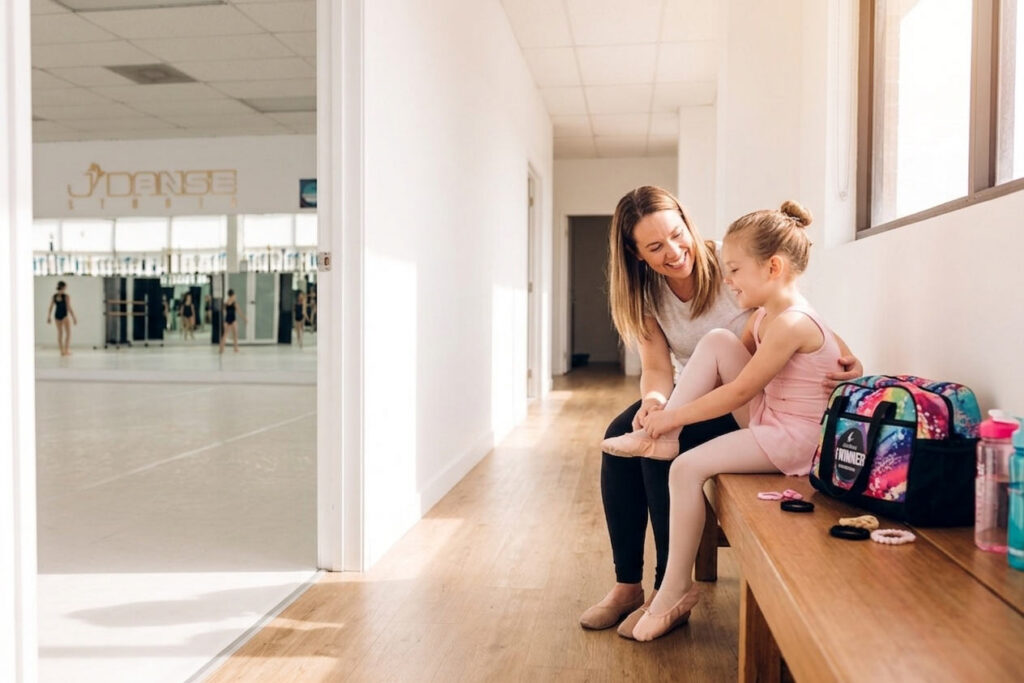
One of the most common questions from new families at J’Danse Studio is a simple one: what does my child actually wear to their first dance class? The answer depends on the style, but the short version is — don’t stress over it, and definitely don’t buy anything expensive before your child’s first class.
The short answer: every style at J’Danse Studio has its own dress code, but all new students get a three-week grace period to source the correct dancewear. Comfortable, fitted activewear is completely fine for the first few classes.
Why Dance Studios Have a Dress Code
It’s not about looking a certain way — it’s about safety and technique. Instructors need to see a dancer’s lines, posture, and footwork clearly to give accurate corrections. A loose t-shirt hides exactly the kind of detail — a bent knee, a rolled ankle, a hip that isn’t square — that an instructor is trying to fix in real time.
Safety matters just as much. Baggy clothing can catch during turns and lifts, dangling jewelry can catch on a partner or on equipment during acro, and street shoes with hard soles or grip patterns can cause a slip or a twisted ankle on a sprung dance floor that behaves very differently from a sidewalk. The dress code exists to prevent exactly these kinds of avoidable injuries, not to enforce a look for its own sake.
What to Wear by Style
Ballet — a fitted leotard, footed or convertible tights, and ballet slippers. Younger students typically wear pink slippers; some older or more advanced levels move into black or tan. Hair needs to be pulled back neatly and off the face — a bun is standard for most levels, since loose hair whipping around during turns is both distracting and a safety issue.
Jazz & Lyrical — fitted dancewear (a leotard or fitted top with leggings or shorts) and jazz shoes, which are lightweight, flexible-soled shoes that let the foot articulate through jumps and turns. Hair secured away from the face, same as ballet.
Tap — fitted dancewear plus tap shoes with the correct heel and toe plates already attached. Tap shoes matter more than in most styles, since the sound and response of the plate against the floor is part of the technique itself — a shoe without proper plates simply won’t work for the class.
Hip Hop — athletic wear and clean, non-marking sneakers. This is the most casual dress code at the studio, closer to what a child would wear to a gym class, though the “clean” and “non-marking” part matters — outdoor shoes track in dirt and can scuff or damage the studio floor.
Acro — form-fitting dancewear that allows a full range of motion without riding up or restricting movement, plus bare feet or acro-specific footwear. Loose clothing during inversions, handstands, and partner work is a genuine safety concern, not just an aesthetic preference.
Musical Theatre — similar to jazz: fitted dancewear and jazz shoes, sometimes character shoes depending on the choreography being taught that season.
Creative Dance (toddlers) — comfortable clothes or a simple leotard, bare feet or soft ballet slippers. At this age, comfort and ease of movement matter far more than a specific brand or style.
Every style’s exact requirements — including specific brands and colours where they matter — are on the full J’Danse Studio Dress Code page.
Hair, Jewelry, and Other Details Parents Forget
Dress code questions almost always focus on the outfit, but hair and accessories trip up just as many new families. Long hair should be secured off the face and neck for every style — ponytails are fine for younger or more casual classes, while ballet and more advanced levels usually expect a bun. Dangling earrings, bracelets, and necklaces should come off before class; they can catch during partner work, acro, or even a fast turn, and small studs are generally the only jewelry instructors will allow.
Nail polish and nail length aren’t usually restricted, but very long nails can make certain hand positions in ballet or partner holds in acro uncomfortable or risky. If in doubt, ask the instructor directly — J’Danse Studio’s team would rather answer a “silly” question before class than have a dancer sidelined mid-session over something easily avoided.
What If We Don’t Have the Right Gear Yet?
New students have a three-week grace period from their first class. During that time, fitted leggings or shorts with a fitted top, and bare feet or clean indoor shoes, are perfectly acceptable. Nobody is turned away on day one for wearing the wrong outfit — the grace period exists specifically so families have time to shop without pressure, compare prices, or wait for a specific size to come back in stock.
This is especially useful for families who are still deciding whether a style is the right fit. There’s little point buying a full set of ballet slippers and a leotard before you know your child actually enjoys the class — the grace period lets that decision happen naturally, without an unnecessary purchase if the answer turns out to be “let’s try something else instead.”
Where to Buy Dancewear
J’Danse Studio recommends Capezio and Mondor dancewear, available through our partner Dancewear Centre link on the Dress Code page. Buying secondhand from another dance family, a local consignment shop, or a general dance retailer is also completely fine, as long as the fit and colour match what’s required for the style — nobody at the studio checks labels, only fit and function.
For growing kids, it’s worth buying convertible tights and slightly looser-fitting leotards where the style allows it, rather than replacing everything every few months. Shoes are the one area worth checking regularly — a ballet slipper or tap shoe that’s genuinely too small can affect technique and comfort in a way clothing usually doesn’t.
Common Questions About Dance Class Dress Code
Does my child need the exact brand listed?
No. Capezio and Mondor are recommended because they’re reliable and widely available, but any leotard, tights, or shoe of the right style and colour is acceptable.
What if my child grows out of their dancewear mid-season?
This happens constantly with kids and is never a problem — just replace the item when it no longer fits. Instructors are used to seeing a mix of slightly-too-small and brand-new gear in any given class.
Is the dress code different for competitive dancers?
Competitive-level classes sometimes have more specific requirements around colour or brand for consistency in group choreography, but the fundamentals — fitted, safe, appropriate footwear — stay the same.
Can my child wear a tutu or costume to a regular class?
Regular classes stick to standard dress code so instructors can see technique clearly. Costumes are saved for recitals and performances.
Getting Started
Not sure exactly what your child’s specific class requires? Check the full Dress Code page for style-by-style detail, or reach out directly and the team will point you in the right direction before class.