The short answer: acro dance is safe when it is taught as a progression — where every skill has prerequisites, nothing is attempted before the body can support it, and the instructor is trained in how those progressions work. It becomes unsafe when a child is pushed into a skill early. At J’Danse Studio in Scarborough, acro is taught through the Acrobatic Arts syllabus, which exists specifically to remove that guesswork.
Why Parents Ask This Question
Acro is the one style where parents routinely pause before enrolling, and the concern is reasonable. A ballet class does not visibly involve a child upside down. An acro class does. When a parent watches a class and sees back walkovers and handstands, the instinct to ask “is this safe?” is a sensible one.
The honest answer is that acro is safe or unsafe depending almost entirely on how it is taught. The skills themselves are not the risk. Attempting the right skill at the wrong time is.
What Acrobatic Arts Certification Actually Means
Acrobatic Arts is a formal training and certification program for acro instructors. It is not a marketing badge — teachers complete training and testing to be certified, and the syllabus they then teach is built around a defined progression of skills.
In practice, that means a dancer does not attempt a back walkover because they asked to, or because a friend can do one. They attempt it when they have demonstrated the prerequisite strength, flexibility and body awareness that make it achievable without strain. Each skill sits inside a sequence, and the sequence is the safety mechanism.
The syllabus also divides acro into distinct components — flexibility, strength, balancing, limbering and tumbling — and trains them separately. A child is not asked to perform a skill that depends on shoulder strength before the shoulder strength has been built.
Of the Scarborough studios we are aware of, acro is offered by some and not by others, but Acrobatic Arts certification specifically is not something most local studios advertise. It is the clearest difference between our acro program and a general tumbling class.
The Five Things That Make an Acro Class Safe
1. Progression over ambition. The instructor decides when a dancer is ready, not the dancer and not the parent. A child who wants to attempt a skill before the groundwork is in place is told no, and told why. That is the single most important safety factor in the room.
2. Proper warm-up every session. Acro places load on wrists, shoulders, spine and hamstrings. A class that goes straight into tumbling without preparing those structures is cutting the one corner that matters most.
3. Spotting, and then withdrawing it gradually. New skills are physically supported by the instructor. Support is reduced deliberately and incrementally as the dancer’s control improves, rather than removed in one step.
4. Appropriate surfaces. Our studios at 2105 Midland Avenue use sprung floors, which absorb impact in a way that a hard floor over concrete does not. For a style involving repeated landings, the floor is equipment, not decor.
5. Small classes. Our classes run at roughly six to ten dancers. An instructor spotting a tumbling skill cannot simultaneously supervise twenty-five children. Class size is a safety consideration in acro in a way it is not in most other styles.
What a Typical Acro Class Looks Like
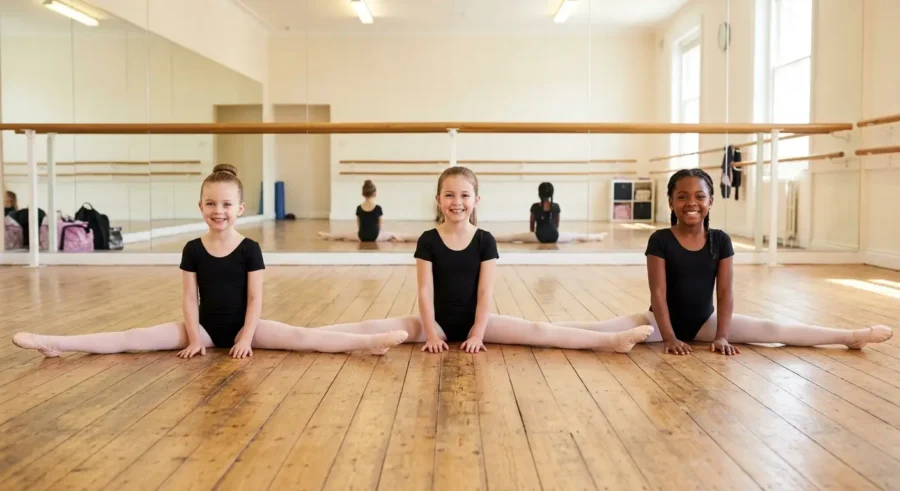
A class opens with a general warm-up, then conditioning focused on the areas acro loads most — core, shoulders, wrists and hamstrings. Flexibility work follows, which is active rather than passive: dancers build range they can control, not just range they can reach with help.
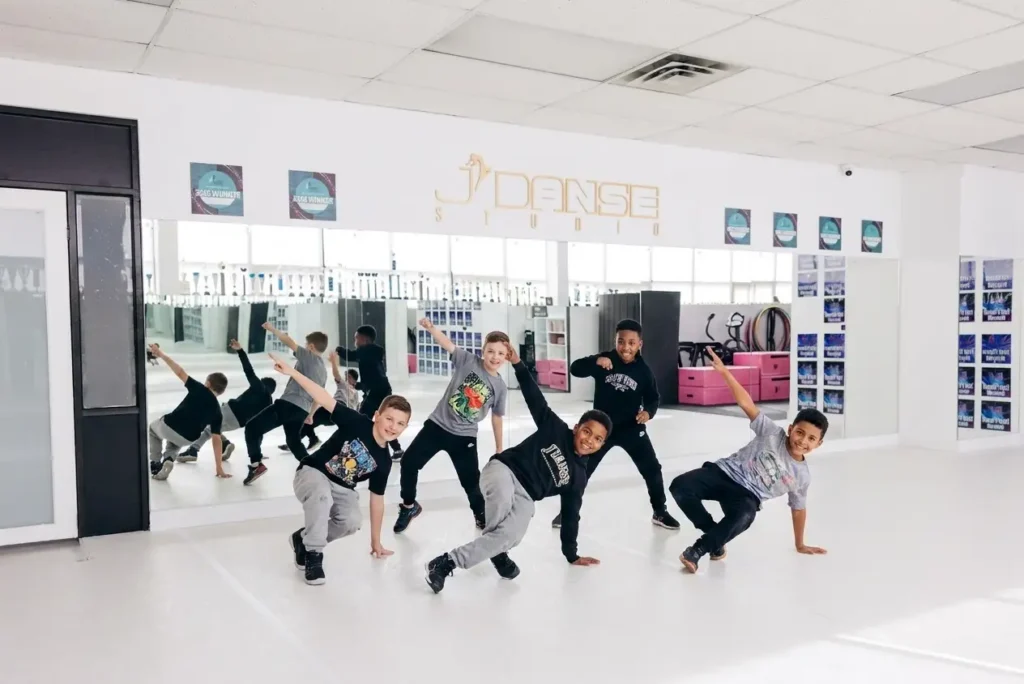
The skill portion of the class is where the progression is visible. Dancers work at their own stage within the group. One child may be refining a bridge while another works on a back walkover and a third on a limber. They are in the same class, at the same time, on different rungs of the same ladder.
Classes finish with combinations that link acro skills into dance sequences, because acro in a dance studio is a dance style rather than gymnastics. The skills exist to be used musically and in choreography, which is also why acro dancers tend to have better lines and transitions than dancers who learn tumbling alone.
How Acro Differs From Gymnastics
This distinction matters for safety as well as for what your child will learn. Gymnastics is apparatus-based, judged against a defined code, and generally trains for competitive execution. Acro dance is floor-based, performed to music, and integrated into choreography.
Practically, acro places less cumulative load on a young body than high-volume competitive gymnastics training does, because the skill count per session is lower and the emphasis is on controlled, musical execution rather than maximum difficulty.
What Age Can a Child Start Acro?
Children can begin acro foundations from around age four, and at that stage it looks like rolls, bridges, balance work and basic body awareness — nothing inverted and nothing loaded. Younger children at J’Danse Studio start in Creative Dance from age 1.5, which builds the coordination that later acro work depends on.
From roughly seven onwards, dancers with the necessary strength begin limbering and tumbling progressions. Teens frequently train acro alongside ballet or jazz, and the strength carries across to both.
Frequently Asked Questions
Is acro dance safe for a child with no gymnastics background?
Yes. The syllabus assumes no prior experience and begins with foundations. A dancer with no background simply starts at the beginning of the progression, which is where most of our acro students start.
Will acro hurt my child’s back?
Not when flexibility is trained properly. Back injuries in acro generally come from forcing range the dancer cannot actively control. The Acrobatic Arts approach builds active flexibility — range the dancer can hold under their own strength — which protects the spine rather than straining it.
My child is not flexible. Can they still do acro?
Yes. Flexibility is an outcome of acro training, not a requirement for entry. Children who start with limited range often progress noticeably, because the conditioning is built into every class.
Does my child need to do acro alongside another style?
It is not required, though many dancers pair acro with ballet or jazz. Acro builds strength and body awareness that improve the other styles, and ballet in particular develops the line and control that make acro skills look finished rather than merely executed.
What should my child wear for acro?
Fitted clothing with no zippers, buttons or loose fabric, and bare feet. Anything that can catch during an inverted skill is a hazard. Hair must be tied back securely. Our dress code guide has the specifics.
Acro at J’Danse Studio
J’Danse Studio has taught in Scarborough since 2010 — sixteen seasons at the same address, 2105 Midland Avenue, Unit 2, serving Agincourt, Malvern, Wexford, Maryvale, Bendale and the east GTA. Our acro program is Acrobatic Arts certified, runs on sprung floors, and keeps classes small enough that every dancer is spotted properly.
If you would like to understand the style itself in more depth, our guide to what acro dance is and what it builds covers that side. To see current times and levels, browse the acro class page or the full schedule. New students currently receive $50 off registration.