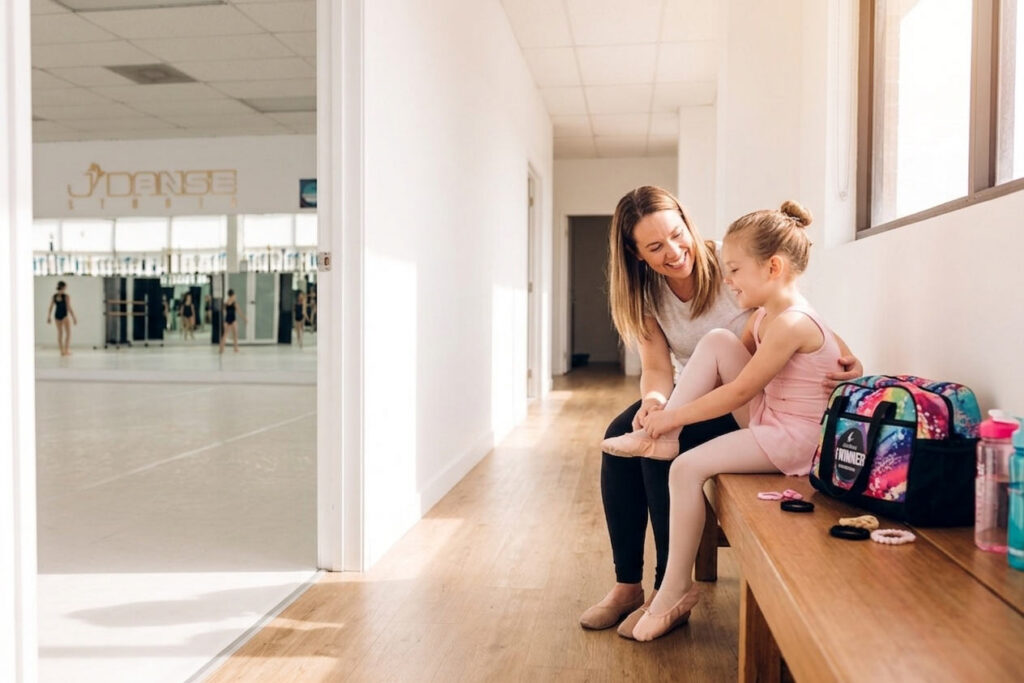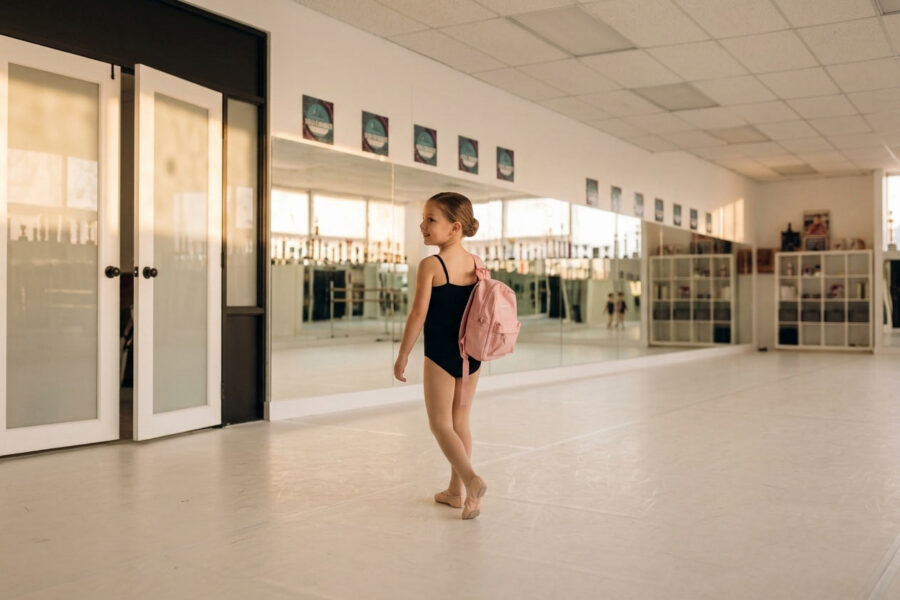
The short answer: yes, your child can start dance in January. The dance season runs September to June, but joining partway through is normal and the studio handles it regularly. What matters is being placed in the right class for your child’s age and experience rather than simply the next one with a space. At J’Danse Studio in Scarborough we have taken on mid-year starters every season for sixteen years.
Why January Is a Sensible Time to Start
September gets the attention, but January has real advantages that parents rarely consider.
Classes have settled. By January the group knows the routine, the instructor knows every dancer, and the early-term churn is over. A new dancer joins a calm, established class rather than a room of thirty children all finding their feet at once.
You know your child’s schedule. In September, families are guessing how school, homework and other activities will actually fit together. By January you know. Choosing a class time in January is based on evidence rather than optimism.
Winter is the right time for an indoor activity. Outdoor options thin out between January and March, and families often find they need something structured, physical and indoors precisely when the weather closes in.
There is still half a season ahead. January to June is five full months — enough to learn a great deal, build real friendships, and take part in the year-end recital.
Will My Child Be Behind?
This is the question that stops most families, and the answer is less worrying than it sounds.
Recreational dance classes are not built like a school syllabus where missing term one makes term two incomprehensible. Classes revisit fundamentals constantly, because technique is refined through repetition rather than covered once and moved past. A dancer who joins in January will spend a few weeks catching up on class-specific vocabulary and then be working at the same level as everyone else.
Where a mid-year start does matter is the recital routine. Choreography for the year-end show is usually underway by January, so a dancer joining then is learning a routine others have already started. In practice instructors plan for this — new dancers are given parts that suit where they are, and in a class of six to ten there is time to bring someone up to speed individually.
The honest caveat: for competitive streams and for pointe, mid-year entry is genuinely harder, because those involve conditioning and safety progressions that build sequentially. For those, a conversation about placement first is essential.
Getting Placement Right
This is the part worth spending ten minutes on, because it determines whether the first month goes well.
Age alone is a poor guide. A seven year old with two years of ballet and a seven year old who has never danced should not be in the same class, and putting them together serves neither. Placement needs to account for age, prior experience, physical readiness and, for mid-year starters particularly, confidence.
Before registering, it is worth telling the studio: your child’s age, any previous dance experience, whether they are joining alone or with a friend, and whether they are generally confident or take time to warm up in new settings. That last point changes the recommendation more often than parents expect.
Which Style Should a Mid-Year Beginner Choose?
For a complete beginner joining in January, some styles absorb newcomers more easily than others.
Hip hop is often the easiest entry point. Combinations are taught fresh regularly, and there is less cumulative technical vocabulary to catch up on.
Acro works well because dancers in a class are legitimately at different stages of the same progression. A newcomer starting at the beginning of that progression is normal rather than conspicuous.
Creative Dance for under-fives absorbs new children at any point, since the class is built around exploration rather than sequence.
Ballet is very achievable mid-year at beginner levels, though at higher levels the technical gap is wider.
If you are unsure, our guide to choosing the right dance style goes through this by temperament and age.
What to Sort Out Before the First Class
Dress code first — arriving in the wrong thing is an avoidable way to make a first class uncomfortable. Our dress code guide sets out requirements by class, and it is worth reading before buying anything.
Arrive ten minutes early for the first session rather than on time. It gives your child a chance to see the room before it fills, which makes a real difference for a child who is nervous.
Plan for a settling period of a few weeks. A mid-year starter is joining a group that already knows each other, and that is a social adjustment as much as a physical one. It passes, and small classes make it pass faster.
What to Expect From the Rest of the Season
January to March is the steadiest stretch of the dance year — consistent weekly classes, technique building, and recital choreography taking shape. From March onward the focus turns increasingly toward the year-end show.
Our recital is a full production rather than an informal demonstration, and for most dancers it is the highlight of the year. A dancer who starts in January will be in it.
Frequently Asked Questions
Can my child join a dance class in January?
Yes. Mid-year registration is normal and we accept new dancers throughout the season, subject to space in the appropriate class. Placement is based on age and experience rather than simply what has availability.
Will my child be the only new one?
Usually not. January is a common entry point, and classes often take several new dancers after the winter break.
Do we pay for the full year if we start in January?
No. Fees for a mid-year start are prorated for the remainder of the season. Contact the studio for exact figures for the class you are considering.
Can a January starter be in the recital?
Yes. Dancers who join in January take part in the year-end show. Choreography will already be in progress, so instructors adapt parts accordingly, which is routine.
What if January turns out to be the wrong class?
Tell us. Moving a dancer to a more suitable class early in their time with us is far better than leaving them in one that does not fit, and we would rather make that adjustment than lose a dancer who was simply placed wrong.
Starting in January at J’Danse Studio
J’Danse Studio has taught at 2105 Midland Avenue, Unit 2 in Scarborough since 2010 — sixteen seasons at the same address — serving Agincourt, Malvern, Wexford, Maryvale, Bendale and the east GTA. We offer Creative Dance from 18 months, Ballet, Jazz, Hip Hop, Acro, Tap, Lyrical, Musical Theatre and the Team JDS competitive program, with classes kept to roughly six to ten dancers.
To get placement right, contact the studio and tell us your child’s age and experience, or browse the full class schedule to see what runs when. New students currently receive $50 off registration.